
Designing a Balcony Garden with Colour and Scent
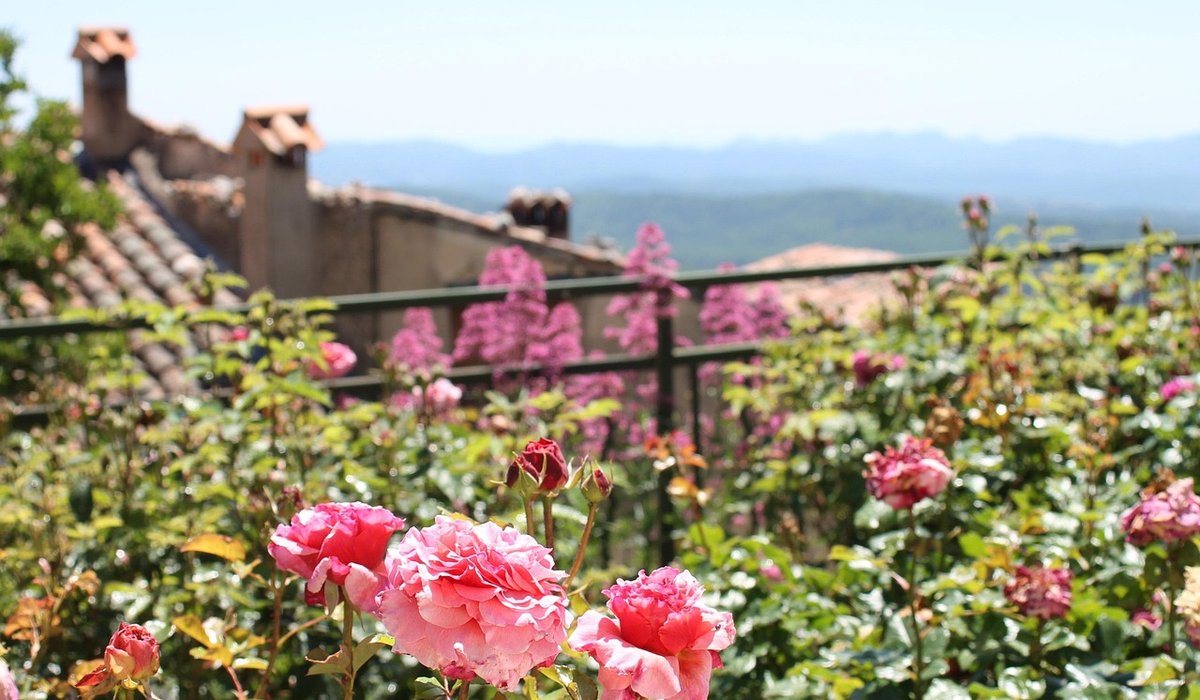
A balcony is one of the most generous spots in a British home to garden in. It sits close to the kitchen, it is visible from the sofa, and it is small enough that you can genuinely keep on top of it. The trick is to treat it as a room rather than a random shelf of pots, and to design for two things at once: colour you can see from indoors and scent you meet the moment you step outside. Layering flowering annuals, fragrant herbs and a few evergreen shrubs in coordinated containers gives you both, without turning the space into a jumble.
Start with the conditions, not the plants
Before you buy a single pot, watch your balcony for a week. Three things will decide almost everything that follows.
- Aspect. A south or west-facing balcony bakes in summer and dries out fast, so you can grow lavender, pelargoniums, verbena and sun-loving herbs. A north or east-facing one is cooler and shadier, where fuchsias, begonias, mint and most foliage plants will be far happier.
- Wind. Even a third-floor balcony can funnel gusts that snap stems and shred flowers. If yours is exposed, choose tough-leaved plants such as rosemary, euonymus or hebe, and avoid tall, top-heavy specimens.
- Weight and drainage. Pots are heavy when wet, so keep the largest containers near the wall or over a supporting beam, and always use saucers or feet so water does not stain the balcony floor or drip onto the neighbours below.
Build in three layers
Professional container planting usually follows a simple formula: a tall thriller, a bushy filler and a trailing spiller. On a balcony, add a fourth layer — a permanent one.
- The permanent layer. One or two evergreens in 30–40 litre pots give the whole scheme a backbone through winter. Compact choices include skimmia, sarcococca (whose winter flowers scent the whole balcony), dwarf choisya, a clipped bay or a star jasmine trained up a small obelisk.
- The thrillers. Tall annuals or tender perennials for height and flowers — cosmos, dahlias, salvias, agapanthus or a standard fuchsia. One per pot is enough.
- The fillers. Bushy, generous bloomers that knit everything together: pelargoniums, nemesia, begonias, calibrachoa or a clump of chives.
- The spillers. Trailing plants that soften the pot rim and blur the hard edges of the balcony — trailing lobelia, bacopa, ivy, creeping thyme or a scented pelargonium allowed to flop.
Group containers in odd numbers and vary the heights, standing one pot on an upturned crate or a low stool. Raising a single container changes the whole composition.
Choose a colour scheme you can repeat
The easiest way to make a small space look designed rather than accidental is to limit yourself. Pick two main colours plus a neutral, then repeat them in every pot. Deep purple with lime green and plenty of grey foliage works beautifully against brick; apricot with burgundy and cream is softer and very flattering in evening light.
White is the most useful neutral of all on a balcony, because it glows at dusk when you are most likely to be sitting out. Use it as a thread — a white nicotiana here, white bacopa there — and the eye will read the whole balcony as one garden. Keep strong colours to a single accent pot so they land as a highlight rather than a shout.
Put scent where you sit
Scent is the most underused tool on a small balcony, and the most rewarding. Plant it within arm's reach of your chair, not at the far end where you will never notice it. A few rules help:
- Limit yourself to two or three scents. More than that and they cancel each other out.
- Choose evening performers for a balcony you use after work: night-scented stock, nicotiana, honeysuckle and jasmine all release their fragrance as the light drops.
- Include foliage scent as well as flowers. Rosemary, thyme, lemon verbena, mint and scented pelargoniums release their oils when you brush past or water them, which means fragrance even when nothing is in bloom.
- Keep the sweetest plants sheltered from wind, ideally against a wall, so the scent pools instead of blowing away.
Pots, compost and the watering routine
Size matters more than style. Small pots dry out within hours in July, so choose the largest containers your balcony can safely take — a 30cm-diameter pot is a sensible minimum, and bigger is better for shrubs. Terracotta breathes and looks lovely but dries faster; glazed ceramic and plastic hold moisture longer.
Use a loam-based compost such as John Innes No. 2 for permanent shrubs, and a peat-free multipurpose mix with water-retaining granules for annuals. Add a handful of slow-release feed at planting time, then switch to a liquid tomato feed every fortnight from June to September. Deadhead weekly — it is the single quickest way to keep flowers coming — and water in the cool of the morning or evening rather than at midday.
Finally, accept that a balcony garden is never quite finished. Swap the annuals twice a year, keep the evergreens going, and let the herbs sprawl a little. A little green chaos, scented and full of colour, is exactly what a small outdoor room needs.

4 Comments